What History Tells Us About Markets During Uncertain Times

A Long-Term Investment Perspective from Populus Wealth
Market uncertainty is an inevitable part of investing. Economic volatility, geopolitical tensions, inflation, and global events all play a role in shaping financial markets. While these periods can feel unsettling, historical market data provides valuable insight into how the stock market performs during uncertain times and reinforces the importance of a long-term investment strategy.
At Populus Wealth, we guide clients to look beyond short-term market fluctuations and focus on long-term wealth management strategies rooted in historical perspective, discipline, and data-driven decision-making.
Historical Market Performance During Uncertain Times
Throughout history, financial markets have faced significant disruptions, including wars, recessions, inflationary periods, and global economic crises. Despite short-term volatility, long-term market growth has remained a consistent trend.
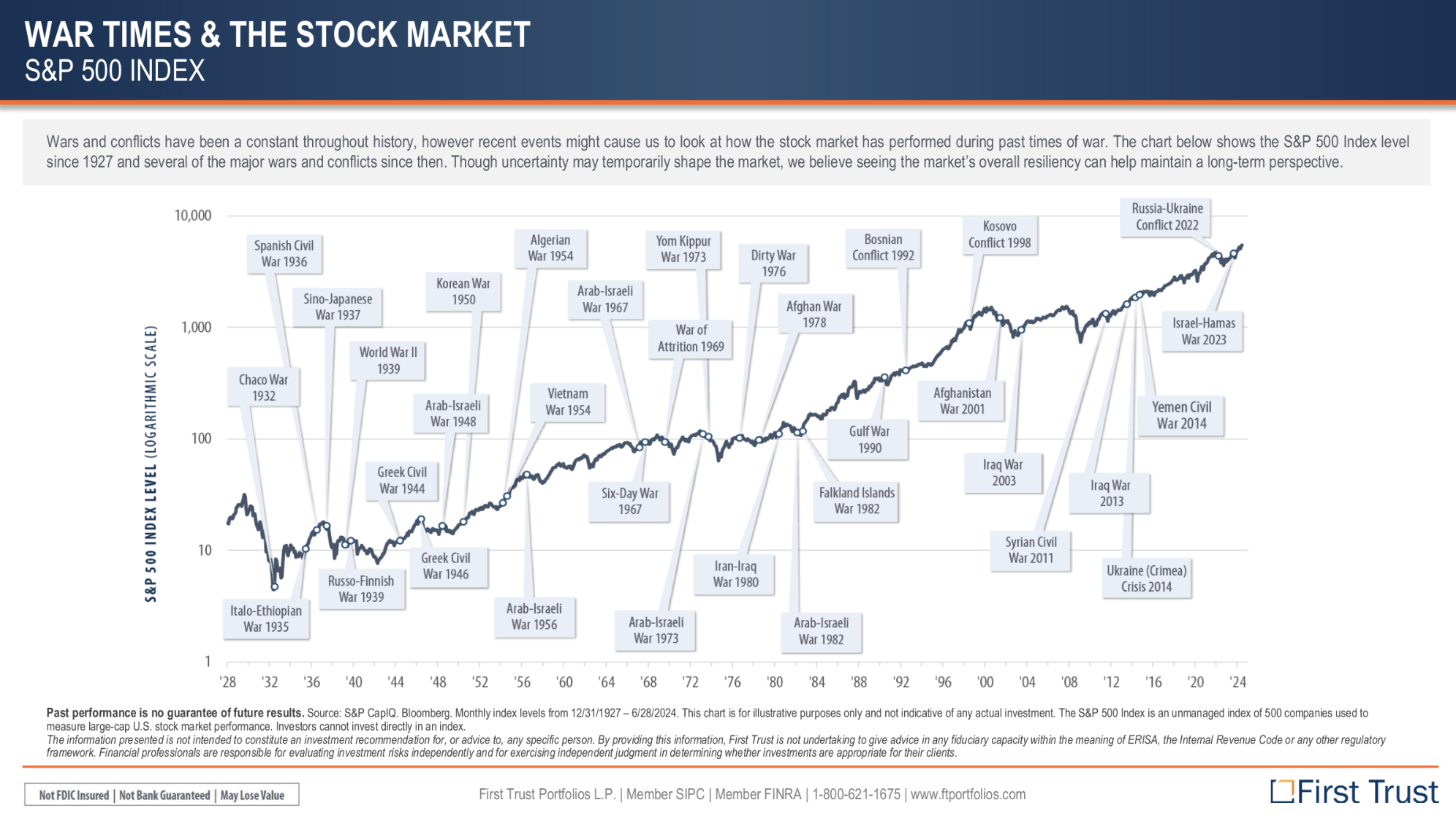
Major global conflicts such as World War I, World War II, the Korean War, the Vietnam War, and more recent geopolitical tensions have all created periods of uncertainty in the stock market. During these times, investor sentiment often shifted, leading to temporary market declines and increased volatility. However, historical data shows that markets have consistently recovered and continued to grow following these events.
In addition to wars, markets have navigated major economic downturns, including:
The Great Depression
The inflation crisis of the 1970s
The dot-com bubble
The 2008 financial crisis
The COVID-19 market crash
Each of these events introduced fear, uncertainty, and significant market fluctuations. Yet over time, markets demonstrated resilience, recovery, and long-term expansion.
How Wars and Geopolitical Events Impact the Stock Market
Geopolitical uncertainty and global conflict are often major drivers of short-term market volatility. However, when we zoom out, a different pattern becomes clear.
Historical analysis of the S&P 500 during major wars and conflicts shows:
Markets may experience short-term declines or volatility at the onset of conflict
Investor sentiment often shifts due to uncertainty and media coverage
Over time, markets adapt, stabilize, and continue their upward trajectory
From World War II to the Vietnam War, the Gulf War, 9/11, and more recent global conflicts, markets have consistently demonstrated resilience. While each event introduces uncertainty, long-term market growth has persisted beyond these disruptions.
This is a key insight for investors:
Geopolitical events influence markets, but they have not historically prevented long-term growth.
Historical Market Cycles: Bull vs. Bear Markets
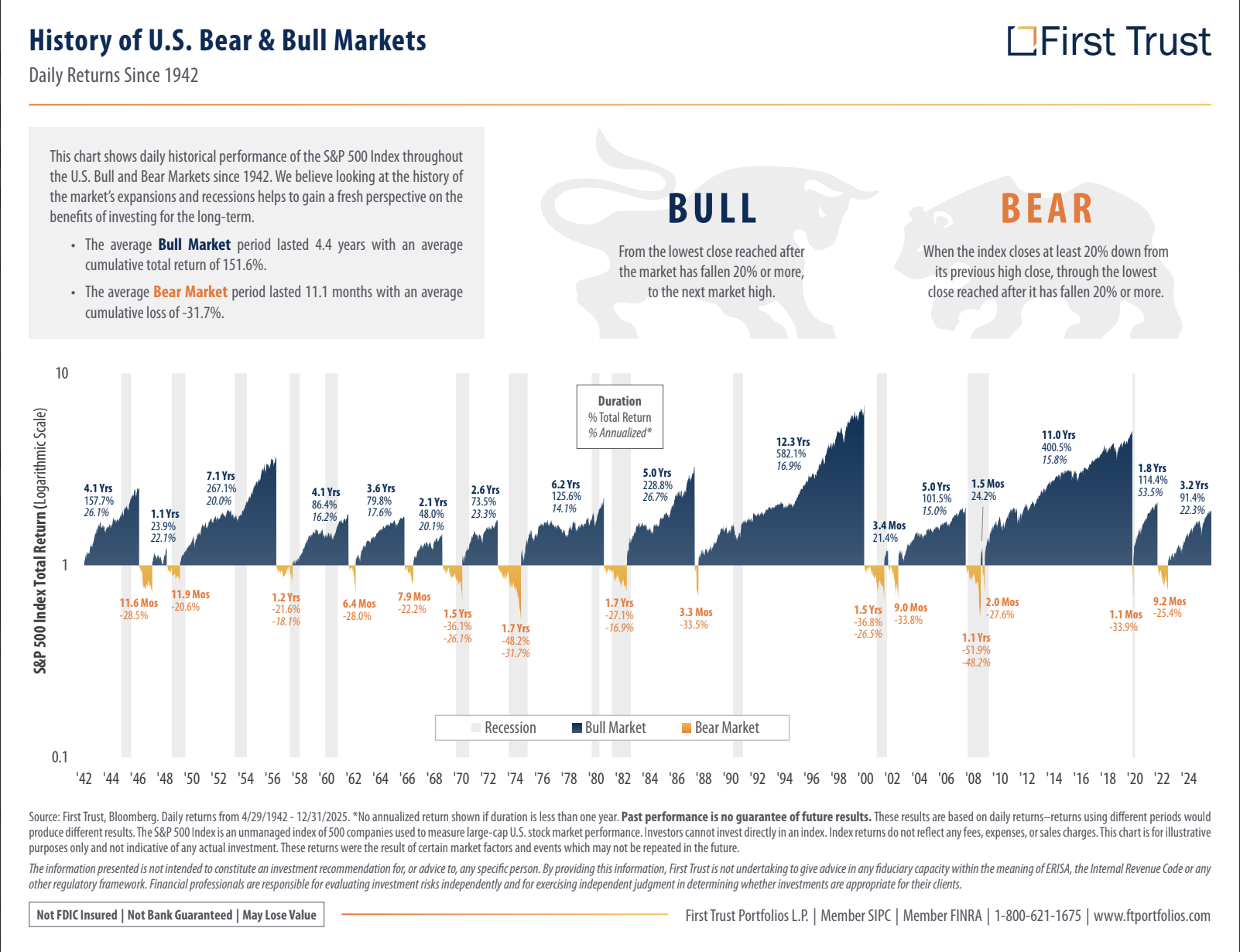
One of the most important concepts in understanding market behavior is recognizing the cyclical nature of bull markets and bear markets.
Historical data shows:
The average bull market lasts approximately 4.4 years, with cumulative returns exceeding 150%
The average bear market lasts approximately 11 months, with average declines around 30%
This data reinforces a critical investment principle: Markets spend significantly more time growing than declining.
For long-term investors, this highlights why staying invested through volatility is often more effective than attempting to time the market.
Avoiding Emotional Investing During Market Uncertainty
One of the most common challenges investors face during volatile markets is emotional decision-making. Fear-driven investing can lead to:
Selling assets during market downturns
Missing periods of recovery
Disrupting long-term financial plans
Locking in losses rather than allowing for recovery
Market history consistently shows that reacting to short-term fear can negatively impact long-term investment performance.
At Populus Wealth, we emphasize disciplined investing strategies designed to help clients stay focused, avoid reactive decisions, and maintain confidence in their financial plan.
Strategic Opportunities During Market Downturns
While uncertainty can create challenges, it can also present strategic opportunities for investors. Periods of market volatility often allow for:
Portfolio rebalancing to maintain asset allocation
Tax-loss harvesting to offset capital gains
Buying opportunities at lower valuations
Reviewing and refining long-term financial strategies
For investors who take a proactive and strategic approach, market downturns can become opportunities to strengthen portfolios and improve long-term positioning.
Market Recovery and Long-Term Growth Trends
Another key takeaway from historical market analysis is that volatility is typically temporary. While the duration of downturns can vary, markets have consistently demonstrated the ability to recover and grow over time.
From global conflicts to financial crises, the long-term trend of the market has remained upward. This growth is driven by:
Technological innovation
Business expansion
Global economic development
Corporate earnings growth
Understanding these long-term drivers can help investors maintain perspective and stay committed to their financial goals.
A Long-Term Wealth Management Approach
At Populus Wealth, our approach to wealth management is rooted in long-term strategy, disciplined investing, and personalized financial planning. We help clients navigate market uncertainty with clarity, ensuring their investment strategy remains aligned with their goals, risk tolerance, and long-term vision.
While market volatility is inevitable, history makes one thing clear: uncertainty does not prevent long-term growth. Investors who maintain perspective, stay disciplined, and focus on long-term outcomes are often best positioned for success.

Key Takeaway: What History Teaches Investors
History provides a powerful reminder that market uncertainty is not new, and it is not permanent. Wars, recessions, and global crises have all tested financial markets, yet long-term growth has persisted.
For investors, the key takeaway is simple but important: A disciplined, long-term investment strategy remains one of the most effective ways to navigate uncertainty and build lasting wealth.